
 English

Our team is committed to providing high-performance energy solutions tailored to your needs. To initiate further communication, kindly submit a formal inquiry for the product(s) of your interest.



Our team is committed to providing high-performance energy solutions tailored to your needs. To initiate further communication, kindly submit a formal inquiry for the product(s) of your interest.
A lithium-ion battery is a complex electrochemical system consisting of several essential components that work together to store and release electrical energy. Here are the key components explained:
Material: Typically a lithium metal oxide (e.g., LiCoO₂, LiFePO₄, NMC, NCA).
Function: Stores lithium ions when the battery is discharged. The choice of cathode material determines the battery’s capacity, voltage, and stability.
Impact: Different materials offer trade-offs between energy density, safety, and cost.
Material: Traditionally graphite, but silicon-based anodes are emerging for higher capacity.
Function: Hosts lithium ions during charging (via intercalation or alloying). The anode’s structure affects charging speed and cycle life.
Note: During discharge, lithium ions move from the anode back to the cathode.
Composition: A lithium salt (e.g., LiPF₆) dissolved in organic solvents (e.g., ethylene carbonate).
Function: Conducts lithium ions between the cathode and anode while preventing electron flow (electrons travel externally through the circuit).
Challenge: Must be stable, non-flammable, and work across a wide temperature range. Solid-state electrolytes are being developed for enhanced safety.
Material: A porous polymer membrane (e.g., polyethylene or polypropylene).
Function: Physically separates the cathode and anode to prevent short circuits while allowing ion transport through its pores.
Critical Property: Thermal shutdown capability (pores close at high temperatures to halt reactions).
Cathode side: Aluminum foil (lightweight and stable at high voltages).
Anode side: Copper foil (conductive and resistant to reaction with lithium).
Function: Collect and transfer electrons between the electrodes and the external circuit.
Binder: (e.g., PVDF) holds active material particles together and onto the current collector.
Conductive Additives: (e.g., carbon black) enhance electrode conductivity.
Role: Ensure structural integrity and efficient electron flow within electrodes.
Application in EVs: These individual lithium ion battery car battery cells are modularly integrated into large packs. Depending on the vehicle's power requirements, thousands of cells are connected in series and parallel to provide the necessary energy density and voltage.
Types: Cylindrical (e.g., 18650), prismatic, or pouch (soft-pack).
Function: Encapsulates components, provides mechanical support, and may include safety vents (for gas release).
BMS in High-Voltage Systems: The BMS is particularly vital for high-voltage applications. For instance, in a 72v lithium ion golf cart battery or a 60v lithium ion golf cart battery, the BMS ensures that every single cell operates within safe limits, balancing the charge to maximize the vehicle's range and battery lifespan.
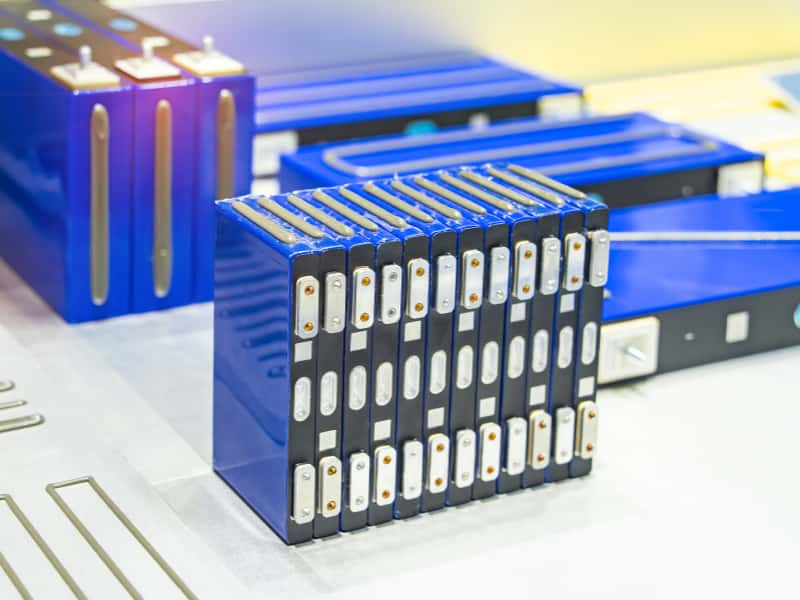
This efficient movement of ions is what powers modern mobility, from the precision required in a lithium ion battery car battery cell to the heavy-duty cycle performance needed for a 60v lithium ion golf cart battery.
During charging, lithium ions de-intercalate from the cathode, move through the electrolyte, and insert into the anode (while electrons flow externally). During discharging, the process reverses, generating an electric current.
Solid-State Batteries: Replace liquid electrolytes with solid conductors for safety and energy density.
Silicon Anodes: Increase capacity but face expansion issues.
Cobalt-Free Cathodes: Reduce cost and ethical concerns (e.g., LFPs).
Flammable electrolytes and thermal runaway risks necessitate robust engineering. Innovations like ceramic-coated separators and advanced BMS are critical for safety.
These components’ precise engineering determines a battery’s performance, lifespan, safety, and cost—key factors in applications from consumer electronics to electric vehicles and grid storage.
Quick Summary & FAQs
Q: What is the best voltage for a lithium golf cart battery?
A: It depends on your motor. Most modern high-speed carts use a 72v lithium ion golf cart battery for better torque, while standard models typically use a 60v lithium ion golf cart battery.
Q: Can I replace lead-acid cells with a lithium ion battery car battery cell?
A: Yes, lithium cells offer 3x the lifespan and significantly less weight, making them the superior choice for modern electric vehicles and golf carts.

Leave A Message
Scan to Wechat :

Hi! Click one of our members below to chat on