
 English

Our team is committed to providing high-performance energy solutions tailored to your needs. To initiate further communication, kindly submit a formal inquiry for the product(s) of your interest.



Our team is committed to providing high-performance energy solutions tailored to your needs. To initiate further communication, kindly submit a formal inquiry for the product(s) of your interest.
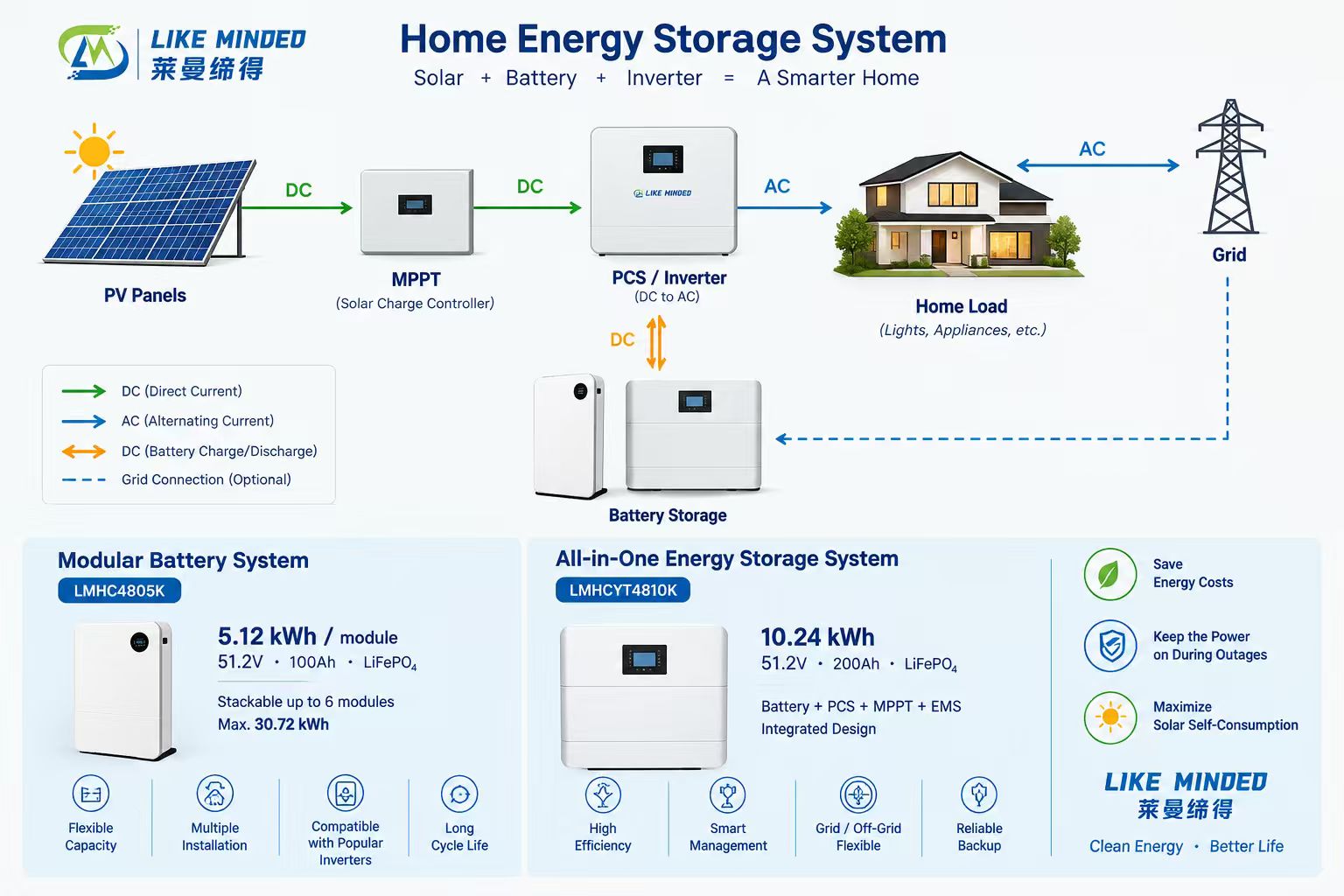
Two storage systems with almost the same energy label can behave very differently on a wall. A 5kWh stacked battery is a pure DC battery that leans on an existing hybrid inverter; a 10kWh all‑in‑one packs battery, PCS (Power Conversion System), MPPT and EMS into one enclosure and needs nothing else. Buyers often compare them on price per kilowatt‑hour and stop there — which is exactly how projects end up with a system that either cannot carry the load or cannot be expanded.
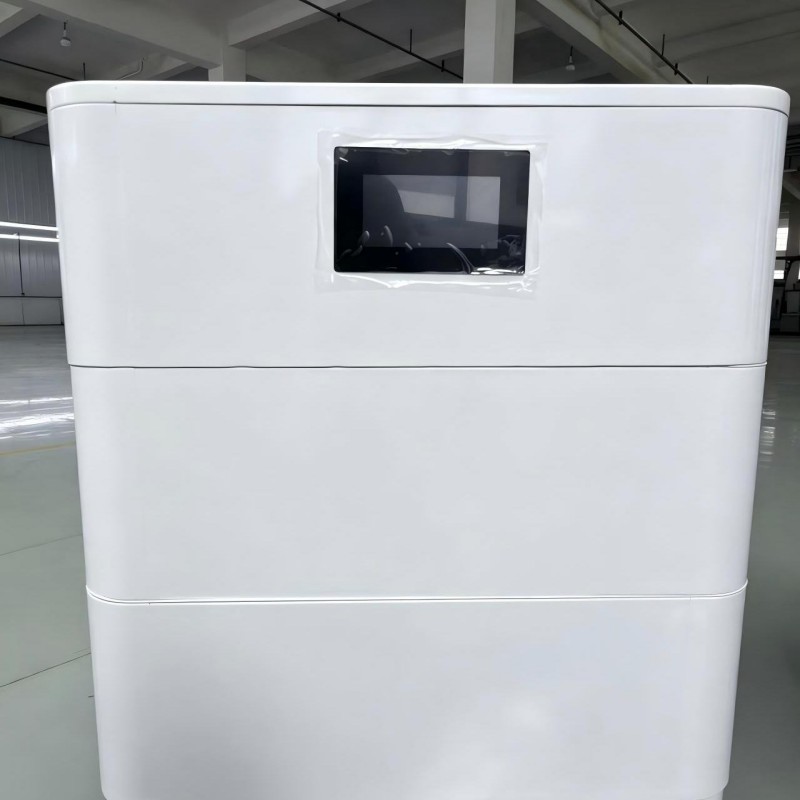
This comparison uses two real products from our own line: the LMHC4805K 5.12 kWh stacked module and the LMHCYT4810K 10.24 kWh PCS all‑in‑one. Both use LiFePO₄ cells, both rate ≥6000 cycles at 80% DOD, and both are sold as home battery storage system building blocks. The difference is architecture, and architecture decides who should buy which.
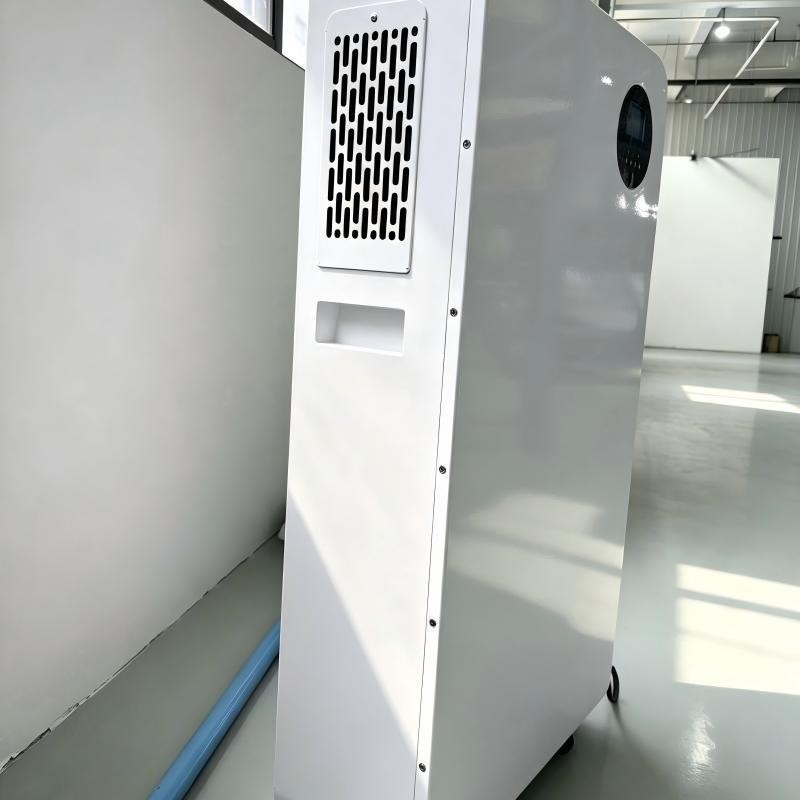
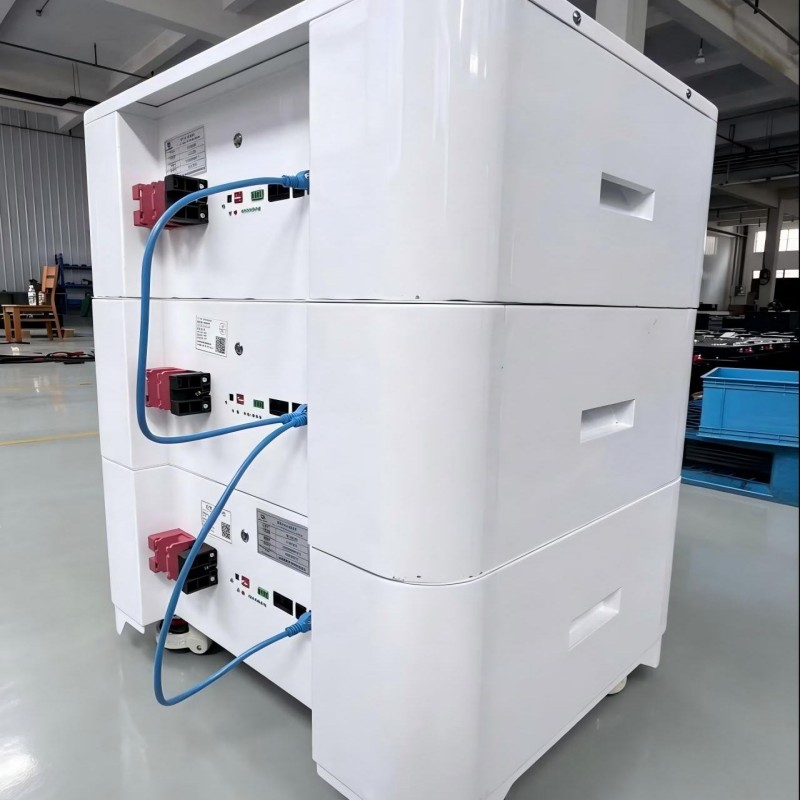
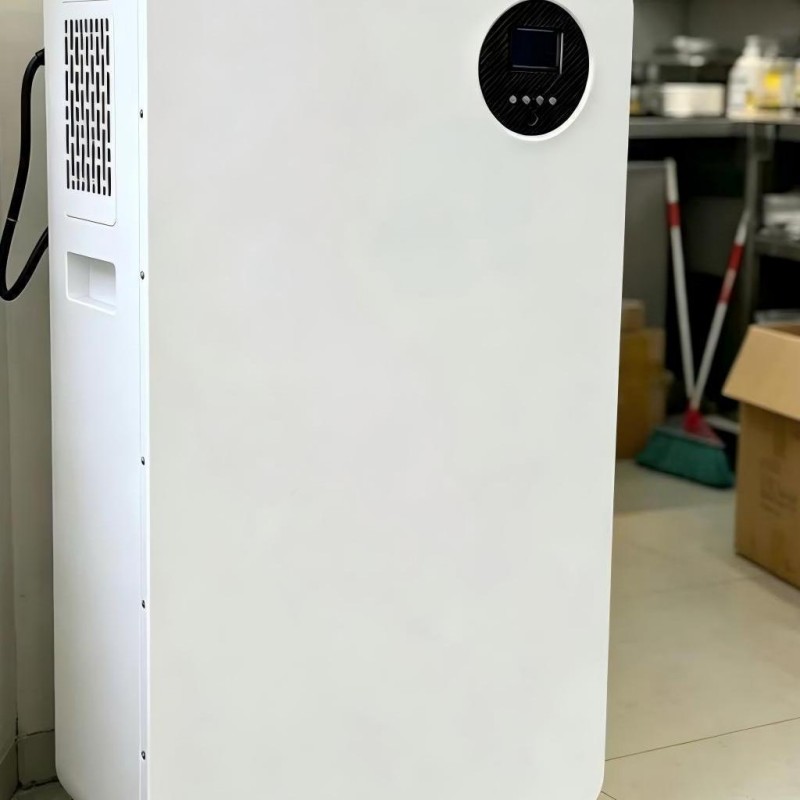
Two Architectures, One Table
|
Item |
5.12 kWh stacked battery |
10.24 kWh all-in-one |
|
What it is |
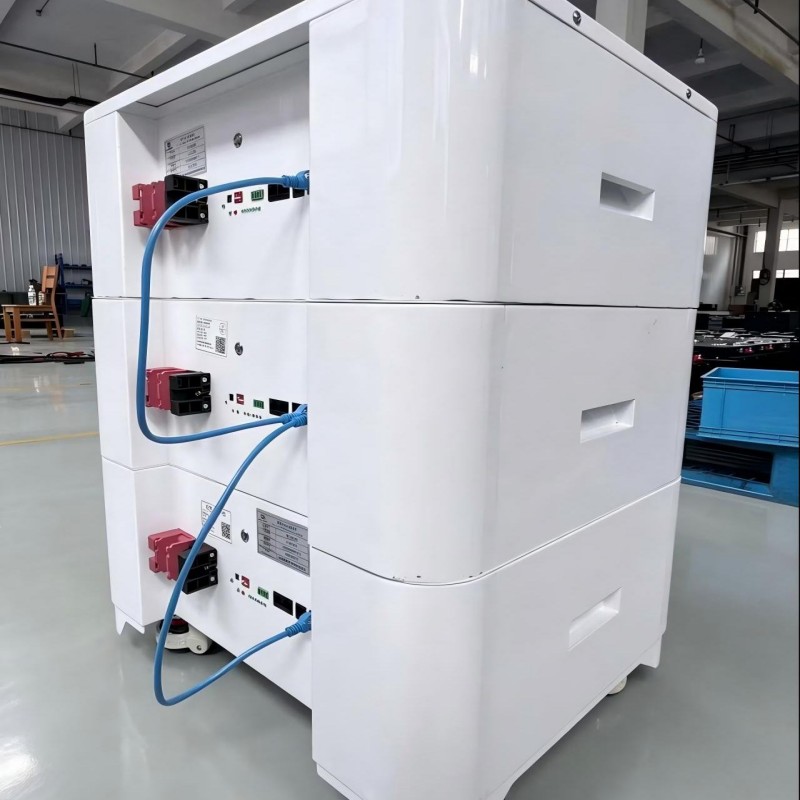
DC battery module, stackable 1–6 units |
Battery + PCS + MPPT + EMS in one cabinet |
|
Rated energy |
5.12 kWh per module |
10.24 kWh (200Ah / 51.2V) |
|
Usable energy @90% DOD |
4.61 kWh per module |
9.22 kWh |
|
Max continuous discharge |
100A (peak 110A / 15s) |
150–200A |
|
Max output power |
≈5.12 kW, fixed regardless of module count |
5 kW or 10 kW rated, 10–20 kW peak (10s) |
|
Inverter needed |
Yes — hybrid inverter required |
No — built in, grid-tie and off-grid |
|
PV input |
Via the inverter's MPPT |
MPPT built in, up to 8.5 kW PV, Voc 500V |
|
Backup transfer |
Depends on inverter |
≤10 ms, UPS-grade |
|
Expansion |
1–6 modules, 5.12–30.72 kWh |
Up to 9 units in parallel |
|
Size & weight |
550×450×217 mm, 45 kg per module |
1000×580×217 mm, 125 kg |
|
Mounting |
Floor stack, wall mount, 19" rack |
Floor standing or wall mount |
|
Monitoring |
LED + CAN / RS485 / RS232, WiFi or Bluetooth, OTA |
LCD touchscreen + WiFi / 4G + app + cloud, OTA |
|
Warranty |
5–10 years or 6000 cycles |
Battery 5–10 years; PCS 2–5 years |
When the Stacked Battery Is the Better Buy
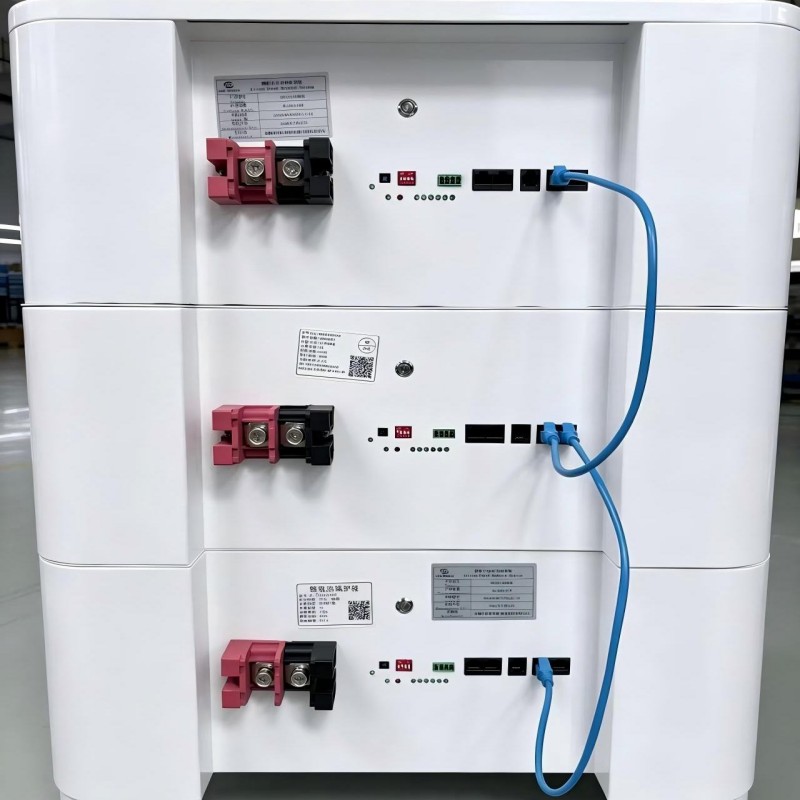
A 5kWh stacked battery wins whenever a competent inverter is already on site, or when the installation will grow in stages. Four situations fit it well:
· The inverter is already installed. Replacing a tired lead-acid bank or adding capacity to an existing Deye, Growatt, Goodwe, Solis or Victron system costs only the battery. No second inverter, no re-commissioning of the PV side.
· The budget is staged. Start with two modules (10.24 kWh) and add a module later when the load grows. The base, busbars and communication chain are designed for 1–6 modules, so expansion is a mechanical step, not a redesign.
· Space is awkward. At 550×450×217 mm and 45 kg per module, it fits a closet, a rack or a garage corner where a 125 kg cabinet will not go. A 19" rack option is unusual in this class and matters for telecom and small commercial rooms.
· The site is off-grid or mobile. Natural cooling, no fan noise, optional low-temperature heating and a −20°C to 55°C discharge range suit cabins, boats and remote telecom nodes better than a fan-cooled cabinet.
When the All-in-One Wins
The 10kWh all-in-one energy storage system is the right answer when there is nothing on the wall yet, or when the load is heavy and backup quality matters. It is a complete system, not a component:
· New installation, one purchase. Battery, 5 or 10 kW PCS, MPPT and EMS arrive pre-assembled and pre-commissioned. The manufacturer claims roughly 60% less installation time than sourcing an inverter and a battery separately, and there is only one party to call when something misbehaves.
· UPS-grade backup. Grid-to-off-grid transfer is ≤10 ms, so computers, routers, pumps and medical devices ride through an outage without rebooting. A battery-plus-inverter combination only delivers this if the inverter was specified for it.
· High continuous load. 150–200A discharge and a 10–20 kW peak for 10 seconds carry heat pumps, well pumps and workshop tools that would trip a 100A battery in seconds.
· Tariff arbitrage and self-consumption. The built-in EMS runs six modes — self-consumption, peak shaving, off-grid backup, UPS backup, hybrid and remote dispatch — with time-of-use schedules and export limiting. That is software a bare battery cannot provide.
· Generator and weak-grid sites. AC input accepts 90–280 VAC, which tolerates the wide swings of small generators and rural feeders, and a dry contact can start the generator automatically.
Four Details Buyers Usually Miss
Power does not scale with capacity
Stacking six modules gives 30.72 kWh, but the maximum charge and discharge current stays at 100A on this platform — about 5.12 kW. Capacity grows, power does not. If the site needs 8–10 kW continuous, more modules will not help; the answer is the all-in-one with a 10 kW PCS, or a parallel inverter architecture.
Nameplate kWh is not usable kWh
Both products run 90% DOD, so 5.12 kWh delivers 4.61 kWh and 10.24 kWh delivers 9.22 kWh. Quoting a system by nameplate capacity overstates what the customer can actually draw overnight. Always compare cost per usable kWh, and check whether the quoted figure includes the reserve the BMS keeps for backup.
Mixing modules needs more than the same part number
Expansion modules must be the same brand and model, and the open-circuit voltage difference between them must stay below 0.5V before paralleling. A module that has been cycling for a year and a fresh one will not sit at the same voltage, and the resulting circulating current is a real failure mode. Commission new modules together, or have the supplier match them.
Quick Selection Guide
| Site condition | Recommendation | Why |
|---|---|---|
| Hybrid inverter already installed
|
5.12 kWh stacked, 1–6 modules
|
Lowest cost per kWh added
|
| New build, no inverter yet
|
10.24 kWh all‑in‑one
|
One box, one supplier, one warranty
|
| Load above 6 kW continuous
|
10.24 kWh all‑in‑one (10 kW PCS)
|
Stack power caps at ≈5.12 kW
|
| Backup for sensitive equipment
|
10.24 kWh all‑in‑one
|
≤10 ms transfer, UPS‑grade
|
| Capacity added year by year
|
5.12 kWh stacked
|
Expand without touching the PV side
|
| Rack room / telecom / small shop
|
5.12 kWh stacked, 19" rack
|
Compact, fanless, rack‑mountable
|
| 30 kWh+ in one location
|
2–3 all‑in‑one units in parallel
|
Power and capacity scale together
|
FAQ
A:Charge: 0℃ ~ 45℃; Discharge: -20℃ ~ 60℃. Do not charge below 0℃.
A:≥6000 cycles @ 0.5C, 80% DOD. Actual cycle life depends on usage temperature, charge/discharge rate and depth of discharge.
A:It can be used as a replacement for lead-acid batteries in many scenarios, but check charger parameters and BMS matching first.
A:Store in dry, cool place. Keep SOC at 40%~60%. Check voltage every 3 months.
A:Stop using immediately. Check wiring, charger and BMS protection status. Do not disassemble the battery pack by yourself.

Leave A Message
Scan to Wechat :

Hi! Click one of our members below to chat on