
 English
Our team is committed to providing high-performance energy solutions tailored to your needs. To initiate further communication, kindly submit a formal inquiry for the product(s) of your interest.



Our team is committed to providing high-performance energy solutions tailored to your needs. To initiate further communication, kindly submit a formal inquiry for the product(s) of your interest.
How long will a 10kWh battery last? is the first question almost every buyer asks. The honest answer is: it depends on what you keep running. The same battery can carry a house for four days or for six hours --- the difference is whether the air conditioner is on.
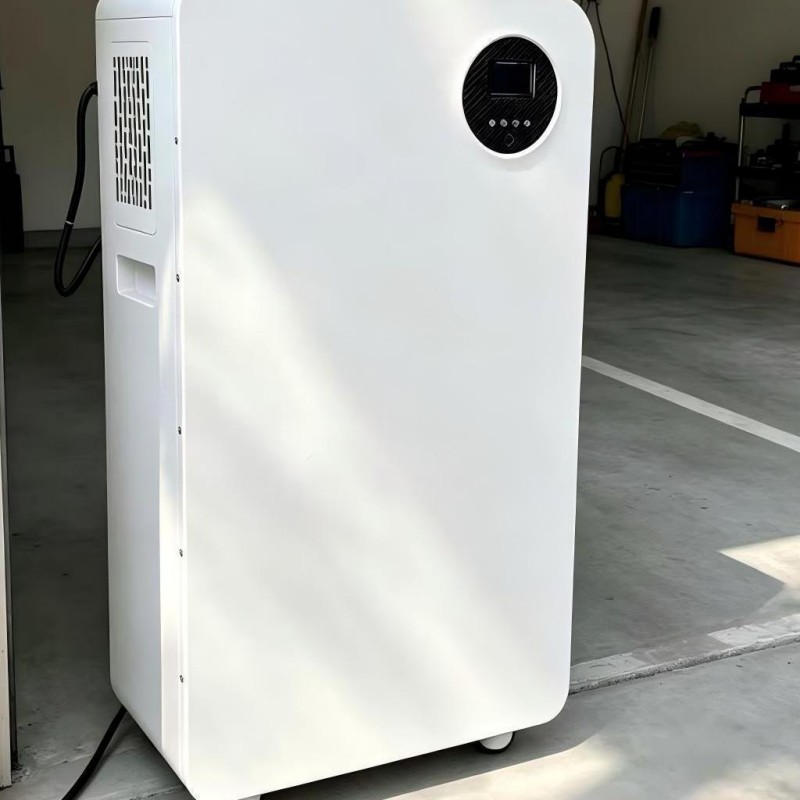
Below are four typical households and what a 10kWh battery backup time actually looks like in each of them. All the numbers use the 10.24 kWh all-in-one system (the battery capacity is the same for both the 5kW and 10kW inverter versions), which delivers about 9.2 kWh of usable energy.
Why Not All 10.24 kWh Is Usable
The label says 10.24 kWh. About 9.2 kWh of that can be drawn in normal use. The rest is a safety margin the battery keeps so it does not run to empty, which helps protect its life over 6000 cycles (tested at 80% depth of discharge). So when you plan backup time, start from 9.2, not 10.24.
Usable energy: 9.2 kWh
One 1.5 HP air conditioner: about 1.1 kWh per hour
A fridge plus lights plus router: about 2 kWh per day
What Home Appliances Actually Use
No formulas needed. Here is a normal evening in a three-bedroom home:
|
Appliance |
Typical power |
Hours used |
Energy |
|
Fridge |
50W average |
All day |
1.2 kWh |
|
LED lights × 10 |
80W total |
5 h |
0.4 kWh |
|
Router & modem |
15W |
All day |
0.36 kWh |
|
TV |
120W |
4 h |
0.48 kWh |
|
Laptop |
60W |
6 h |
0.36 kWh |
|
Fan |
50W |
8 h |
0.4 kWh |
|
Water heater |
2000W |
1 h |
2.0 kWh |
|
1.5 HP air conditioner |
1100W |
8 h |
8.8 kWh |
(Typical consumption, not a specification. Your appliances may differ.)
Look at the last two rows. The air conditioner alone uses almost twice as much as everything else combined. That single fact explains most of the confusion around backup time.
Fridge, lights, router, phone charging. That is about 2 kWh a day, so 9.2 kWh lasts roughly four days. Most outages are over long before that.
Add TV, laptops and a fan to the basics: about 3.4 kWh a day. One battery covers two to three days of evenings, or a full night plus the next day with plenty left.
This is where expectations break. The air conditioner draws about 1.1 kWh an hour. Take out the 2 kWh the basics need, and roughly 7 kWh is left --- about six to seven hours of cooling. Not six days. If summer comfort matters, plan for two units in parallel, or accept that the battery carries the night and the sun recharges it the next day.
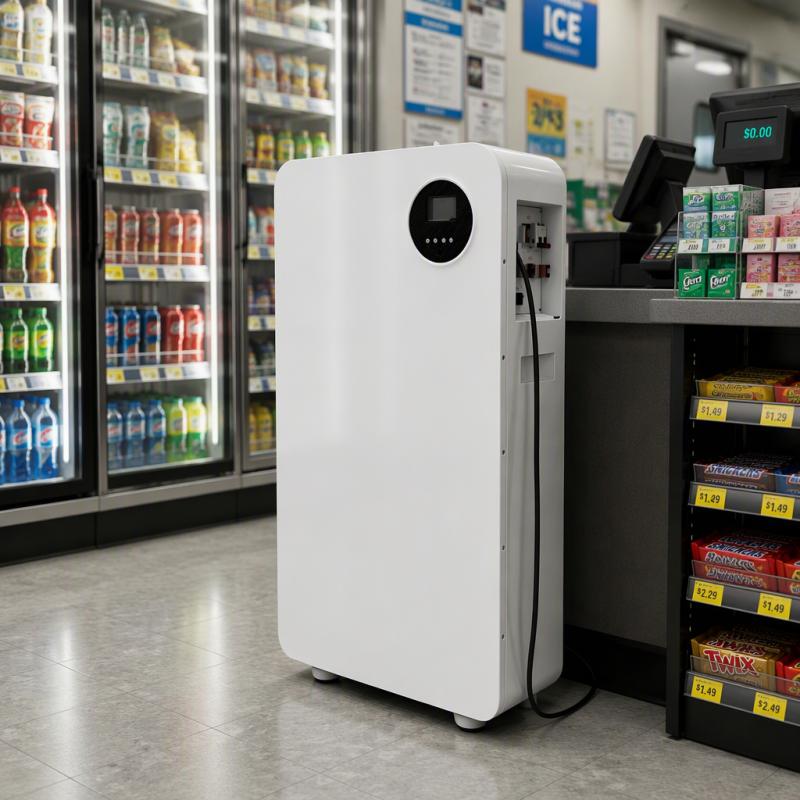
A shop has a different load shape: chest freezers, lighting, POS, cameras. A typical small shop runs about 4.5 kWh a day, so one battery carries about two days --- and it keeps the freezers cold, which is the part that actually costs money when the power fails.
Summary Table
|
Household |
Daily use |
One 10kWh battery lasts |
Feels like |
|
Basics only |
about 2 kWh |
about 4 days |
Outage hardly noticed |
|
Normal evenings |
about 3.4 kWh |
2–3 days |
Comfortable, some habits change |
|
With air conditioning |
about 11 kWh |
about 6–7 hours of cooling |
One night, then recharge |
|
Small shop |
about 4.5 kWh |
about 2 days |
Freezers stay cold |
Set the air conditioner to 26°C and add a fan. Each degree lower costs roughly 5--8% more energy. 26°C plus a fan feels similar to 24°C alone.
Run the water heater in the daytime. It is a 2 kWh load and does not care when it heats. Let the sun pay for it instead of the battery.
During an outage, turn off what you are not using. Standby loads are small individually and add up to a surprising share of the 9.2 kWh by morning.
A 10 kWh battery is not "four days" or "six hours" by itself --- it is whatever your appliances make it. If you are planning whole home battery backup, the honest way to size it is to write down what must keep running, and for how long. If your goal is keeping the fridge cold and the lights on, one unit is generous. If your goal is air conditioning through a summer night, plan for two. Tell us which household you are, and we will tell you which size actually fits, with a datasheet and a quotation.
FAQ
Q1: What exactly is this 10.24 kWh all-in-one system?
A: It is the most hassle-free home backup system available. It integrates the battery, bi-directional inverter (PCS), solar charge controller (MPPT), and smart energy management (EMS) all into one cabinet. It is pre-installed and pre-configured at the factory, so your electrician just needs to connect the wires and it’s ready to go. It saves a massive amount of installation time compared to buying separate components.
Q2: How fast is the switchover during a power outage? Will my appliances shut down?
A: You won't even notice it. The switchover time between grid-connected and off-grid mode is ≤ 10 milliseconds. This is true UPS-level backup. When the grid goes down, your lights won't flicker, your computer won't shut down, and your router won't disconnect. Everything keeps running smoothly.
Q3: Can it connect to solar panels? How efficient is it?
A: Absolutely. It has a built-in high-efficiency MPPT solar charge controller, supporting up to 8.5 kW of PV input with a tracking efficiency of 99.9%. During the day, the solar panels can directly charge the battery or power your home, allowing you to use solar energy and keep the battery full for the night.
Q4: What if I need more power later? Can I expand the capacity?
A: This system is built for future expansion. It supports up to 9 units in parallel. You can start with one 10.24 kWh unit today and easily add another one later if you add high-power appliances, buy an EV, or expand your small shop. You can double both capacity and output power without throwing away your original equipment.
Q5: Is it safe to install inside my house or garage?
A: Extremely safe. It uses LiFePO4 (Lithium Iron Phosphate) cells, which are thermally stable and highly resistant to fire. The system is equipped with intelligent BMS and PCS dual protection. It automatically protects against overcharge, over-discharge, short circuits, and grid anomalies. The sturdy steel/aluminum casing meets IP20/IP65 protection standards, making it perfect for a garage or hallway.
Q6: Is it noisy? Will it bother me if installed indoors?
A: It is very quiet. It uses smart air cooling, meaning the fans automatically start and stop based on temperature. Even at full load, the noise level is ≤ 50 dB (roughly the volume of a normal indoor conversation). You won't hear it from the next room.
Q7: Can it work in extreme heat or cold?
A: Yes. It has a wide operating temperature range for discharging, from -10°C to 55°C. Whether it's a scorching summer or a freezing winter, it will keep your home powered reliably.

Leave A Message
Scan to Wechat :

Hi! Click one of our members below to chat on