
 English

Our team is committed to providing high-performance energy solutions tailored to your needs. To initiate further communication, kindly submit a formal inquiry for the product(s) of your interest.



Our team is committed to providing high-performance energy solutions tailored to your needs. To initiate further communication, kindly submit a formal inquiry for the product(s) of your interest.
When you plan to build a stable, safe and long‑lasting battery system for home energy storage, commercial backup power, electric vehicles or industrial equipment, the 3.2V 100Ah LiFePO4 battery cell is widely regarded as the most cost‑effective and reliable solution. With the rapid development of global clean energy, more users begin to use LiFePO4 batteries to replace traditional lead‑acid and other lithium batteries. However, many buyers lack professional knowledge and often choose unsuitable products, resulting in short service life, poor stability or even potential safety hazards. In this blog, we will share complete and practical selection suggestions to help you choose the best battery cell for your project.
Why 3.2V 100Ah LiFePO4 Battery Cells Dominate the Energy Storage Market
In recent years, lithium iron phosphate battery technology has become increasingly mature, and the 3.2V 100Ah LiFePO4 battery cell has become the mainstream choice in the energy storage industry. Compared with other battery types, it has obvious advantages in safety, cycle life, temperature resistance and consistency. It does not contain heavy metals, is more environmentally friendly, and has stable chemical properties that are not easy to trigger thermal runaway. For long‑term daily use scenarios such as solar energy storage, UPS backup power and communication base stations, this type of battery can provide continuous and stable power output.
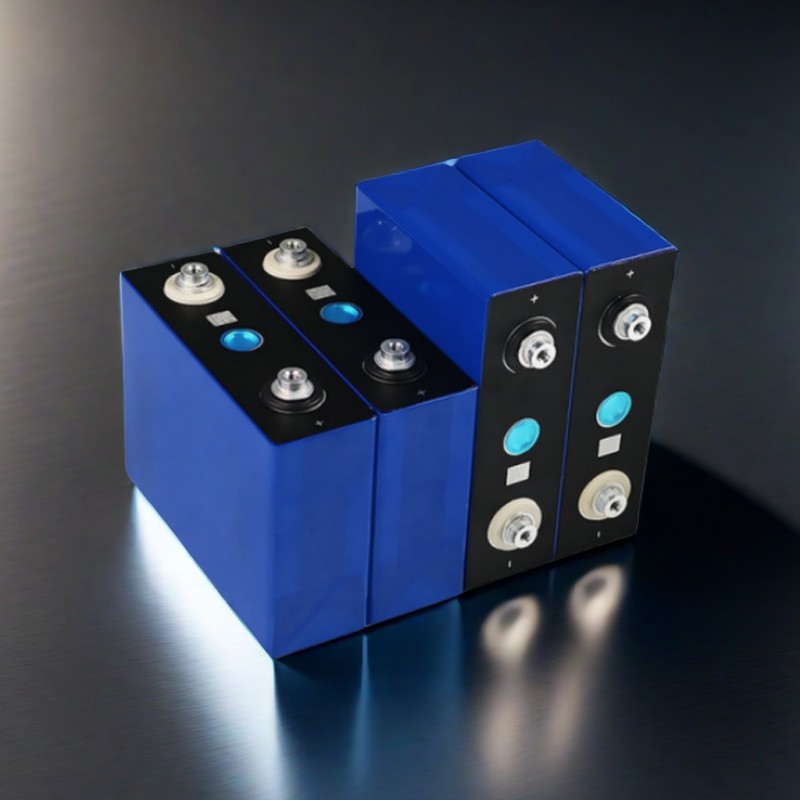
In addition, the square aluminum shell structure makes this battery have good heat dissipation and high mechanical strength. It is easy to install and connect in series or parallel, which is very suitable for large‑scale battery pack assembly. These advantages make the 3.2V 100Ah LiFePO4 battery cell widely recognized in global markets.
Key Performance Indicators You Must Check Before Purchase
Cycle Life
Cycle life is one of the most important indicators to measure battery value. A high‑quality long cycle life 3.2V 100Ah LiFePO4 cell can reach more than 4000 cycles under 0.5C charge and discharge conditions, and still maintain more than 80% of the rated capacity. Longer cycle life means lower replacement frequency and lower overall operating cost, which is critical for industrial and commercial energy storage projects.
Safety Performance
Safety is the bottom line of battery application. The excellent high safety 3.2V 100Ah LiFePO4 cell uses stable lithium iron phosphate material, which has strong thermal stability. It can pass strict safety tests including overcharge, over‑discharge, short circuit, acupuncture, extrusion and high temperature heating, without fire, explosion or liquid leakage. For household energy storage and public equipment, safety performance must be the first consideration.
Working Temperature Range
Batteries used in outdoor and industrial environments must adapt to temperature changes. High‑standard wide temperature range 100Ah LiFePO4 battery supports stable charging at 0℃–45℃ and discharging at -30℃–45℃. Whether in cold winter or hot summer, it can maintain good performance, ensuring that the energy storage system can work normally all year round.
Internal Resistance and Discharge Capacity
Internal resistance directly affects discharge efficiency and heating condition. The stable discharge 3.2V 100Ah LiFePO4 cell has low internal resistance, small heat generation and high energy conversion rate. It supports 0.5C conventional charge and discharge, 1C maximum continuous charge current, 4C maximum continuous discharge and 5C pulse discharge, which can fully meet the high power demand of electric vehicles, forklifts and other equipment.
Self‑Discharge Rate
For backup power and long‑term storage scenarios, self‑discharge performance is very important. The low self‑discharge 100Ah LiFePO4 battery cell has a self‑discharge rate ≤4% within 28 days. It can maintain power for a long time without frequent charging, making it very suitable for emergency power supply, marine power and standby systems.
Typical Application Fields of 3.2V 100Ah LiFePO4 Battery Cells
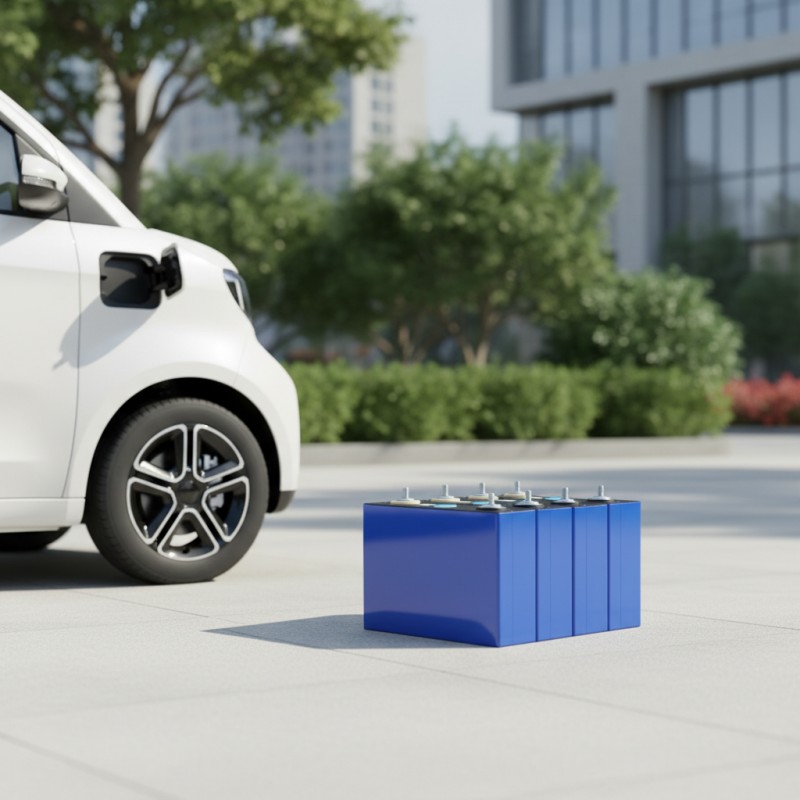
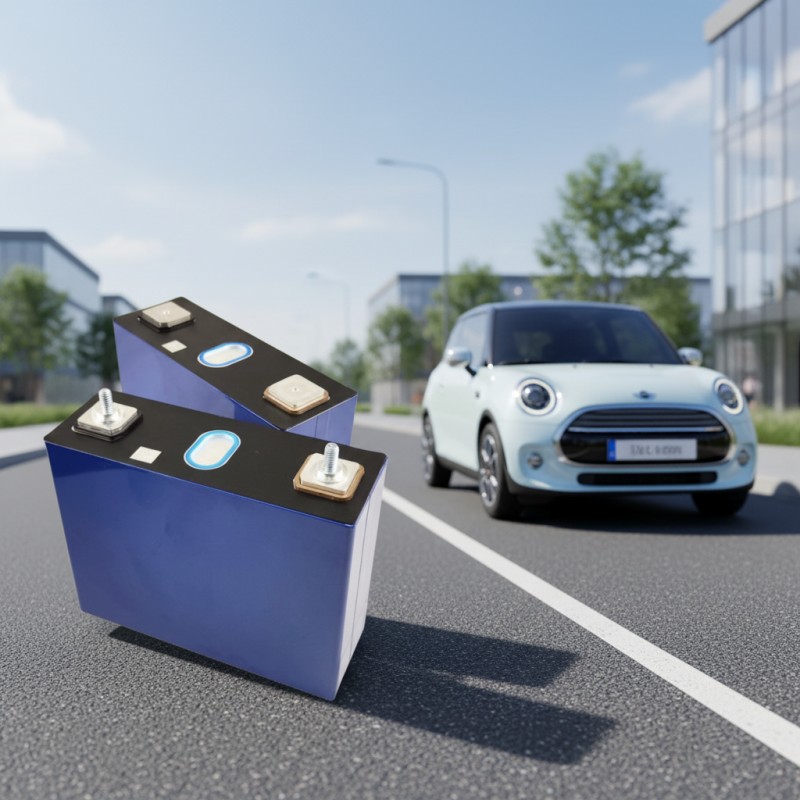
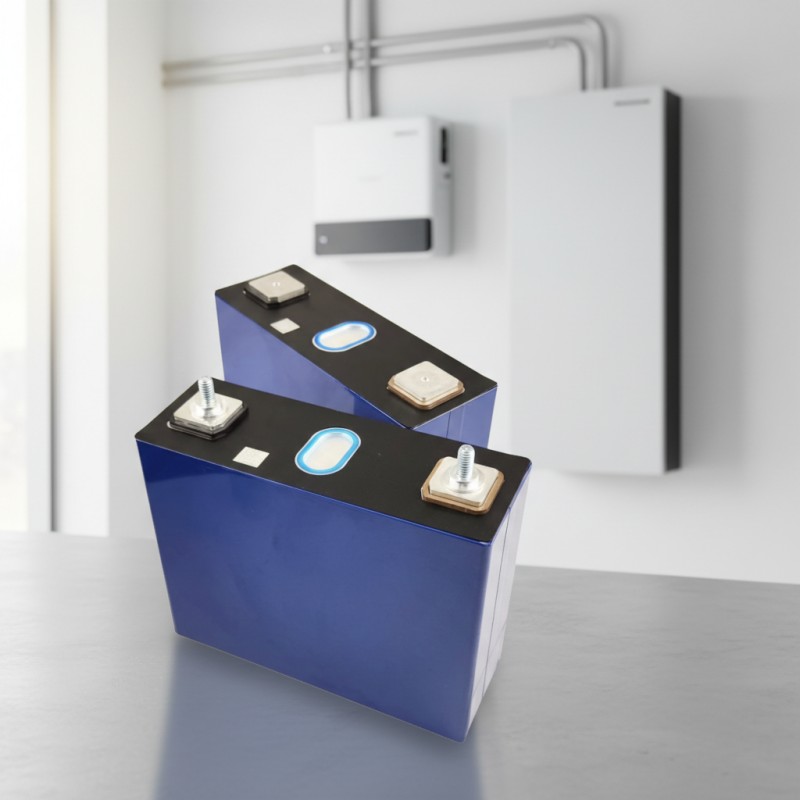
The 3.2V 100Ah LiFePO4 battery cell has a wide range of applications and strong compatibility. It is widely used in solar and wind energy storage systems, household energy storage boxes, UPS backup power, communication base station power, medical equipment, electric forklifts, electric vehicles, marine power, emergency power supply and various industrial mobile equipment.
With high consistency and stable voltage output, this battery can be flexibly combined in series and parallel to form battery systems of different voltages and capacities, meeting customized needs of different projects.
Professional Usage and Maintenance Tips
To extend the service life of the battery and ensure stable performance, you must follow correct usage and maintenance methods:
Use a matching charger and discharge equipment to avoid overcharge and over‑discharge.
Keep the battery working within the specified temperature range to avoid exposure and moisture.
For long‑term storage, keep the battery in a dry and ventilated environment at 0℃–30℃, and maintain the SOC at 5%–50%.
Avoid physical collision, extrusion and short circuit between positive and negative electrodes.
Regularly check voltage, internal resistance and appearance status to find and deal with abnormalities in time.
Choosing a high‑quality 3.2V 100Ah LiFePO4 battery cell is the key to ensuring the safety, stability and service life of your entire power system. Before purchasing, you should fully understand key parameters such as cycle life, safety performance, temperature adaptability, internal resistance and self‑discharge rate, so as to avoid choosing inferior products.
Whether you are preparing a home energy storage system, industrial backup power or electric vehicle power solution, the reliable 3.2V 100Ah LiFePO4 battery cell can bring you long‑term stable power support and excellent cost performance.
If you are looking for professional battery suppliers and high‑quality products, we are always ready to provide you with technical support and reliable solutions.
If you need customized LiFePO4 battery solutions for your project, feel free to contact us for technical support and bulk pricing.
FAQ
1. What is the nominal voltage and capacity of this battery cell?
This is a 3.2V 100Ah LiFePO4 battery cell with stable performance and high consistency for energy storage and power use.
2. What is the cycle life of the 3.2V 100Ah LiFePO4 battery cell?
It supports up to 4000 cycles at 0.5C charge/discharge, and remains above 80% capacity after long-term use.
3. What is the working temperature range of this battery cell?
Charging temperature: 0℃–45℃; Discharging temperature: -30℃–45℃, suitable for outdoor and industrial environments.
4. Can this 100Ah LiFePO4 cell be used in series and parallel?
Yes, it has high consistency and is widely used for battery pack assembly in energy storage systems and power equipment.
5. What are the standard charge and discharge rates?
Standard charge/discharge rate is 0.5C; max continuous discharge current can reach 4C for strong power output.
6. What is the self-discharge rate of this battery cell?
The self-discharge rate is ≤4% within 28 days, very suitable for standby power and long-term storage.
7. Do you support sample orders and bulk orders?
We support both sample testing and large-scale bulk orders with stable supply and on-time delivery.
8. How should I store the battery for a long time?
Store in a dry, ventilated environment at 0℃–30℃, keep SOC 5%–50% and recharge regularly.
9. Do you provide technical support and after-sales service?
We offer professional technical guidance, installation support and efficient after-sales service.
10. What applications is this battery cell suitable for?
It is widely used in solar energy storage, UPS backup power, electric forklifts, EV, industrial power and communication base stations.

Leave A Message
Scan to Wechat :

Hi! Click one of our members below to chat on