
 English

Our team is committed to providing high-performance energy solutions tailored to your needs. To initiate further communication, kindly submit a formal inquiry for the product(s) of your interest.



Our team is committed to providing high-performance energy solutions tailored to your needs. To initiate further communication, kindly submit a formal inquiry for the product(s) of your interest.
The global market for compact urban commuter EVs continues to expand, with OEMs and battery integrators placing ever-higher demands on pack-level volumetric efficiency, low-temperature range retention, and long-term cycle life. Narrow-profile prismatic LFP cells, with their space-saving form factor, wide operating temperature range, and robust safety architecture, have emerged as the mainstream battery choice for compact commuter EVs. The 102Ah thin-prismatic design pushes thickness to its physical limit while maximizing volumetric efficiency—exactly what the cramped wheelbase of a small car desperately needs.
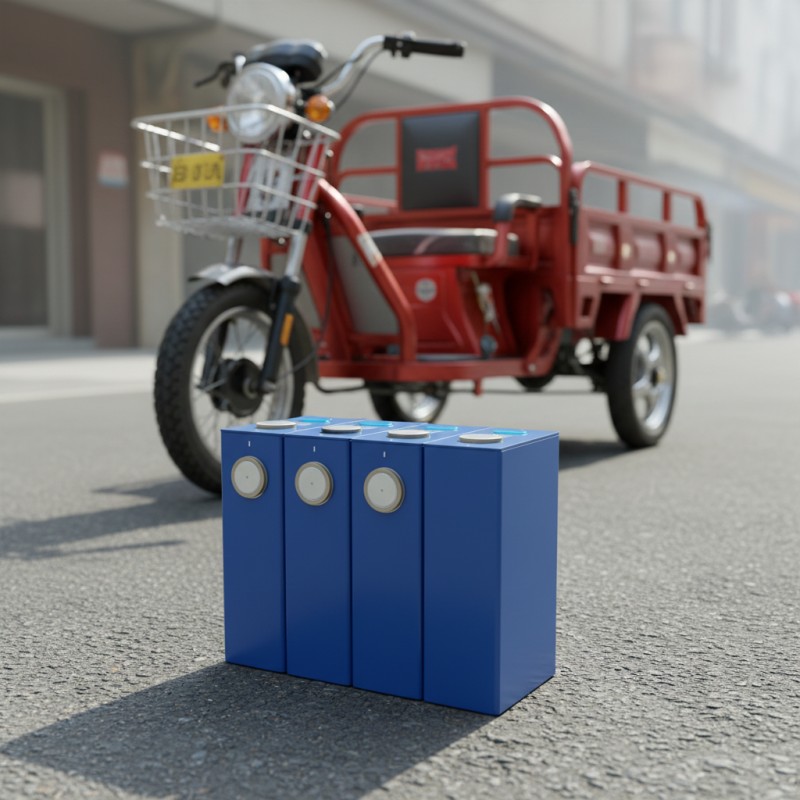
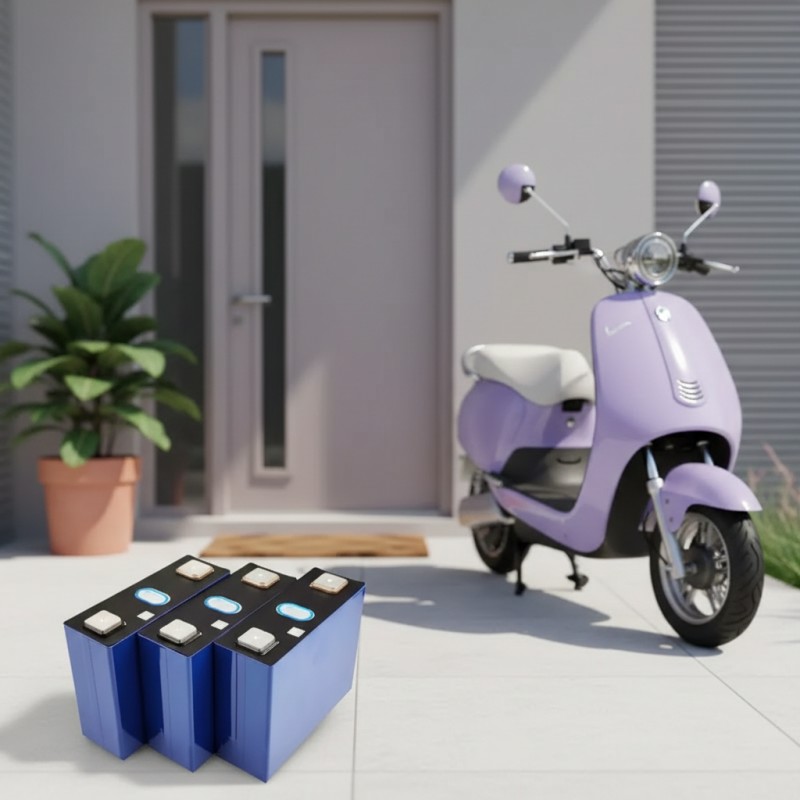
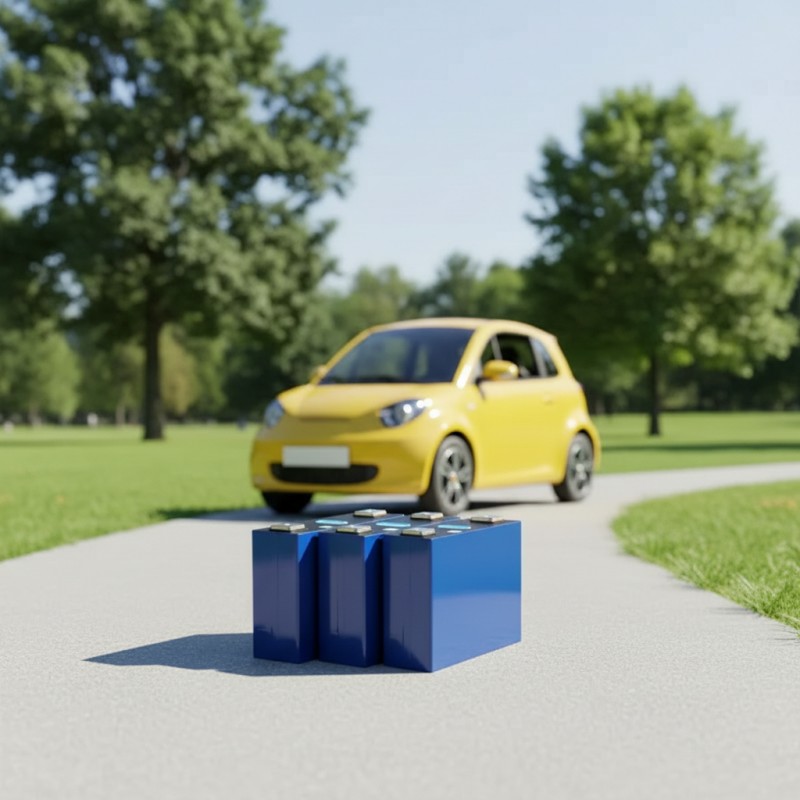
Slim Standardized Dimensions for Limited Chassis Space
Compact EVs are equipped with narrow battery installation areas under the chassis, which impose strict limits on cell size and weight tolerance.
This 102Ah cell measures 49.9±0.5mm (thickness) × 160±0.5mm (width) × 118.5±0.5mm (height), with a single cell weight of around 1970g. The standardized terminal holes are compatible with universal busbars and insulating brackets, enabling tighter cell arrangement during mass assembly. More cells can be installed within the same chassis space to increase total energy storage and extend driving mileage.
The flat cell shell and tight dimensional tolerances simplify battery pack mold development, significantly cutting R&D and mass production costs for small and medium vehicle manufacturers.
Stable Performance Across All Temperatures to Alleviate Cold-Weather Range Loss
Range attenuation in cold climates is a common pain point for EVs in cold regions worldwide. This cell is optimized with balanced electrochemical performance to adapt to global weather conditions:
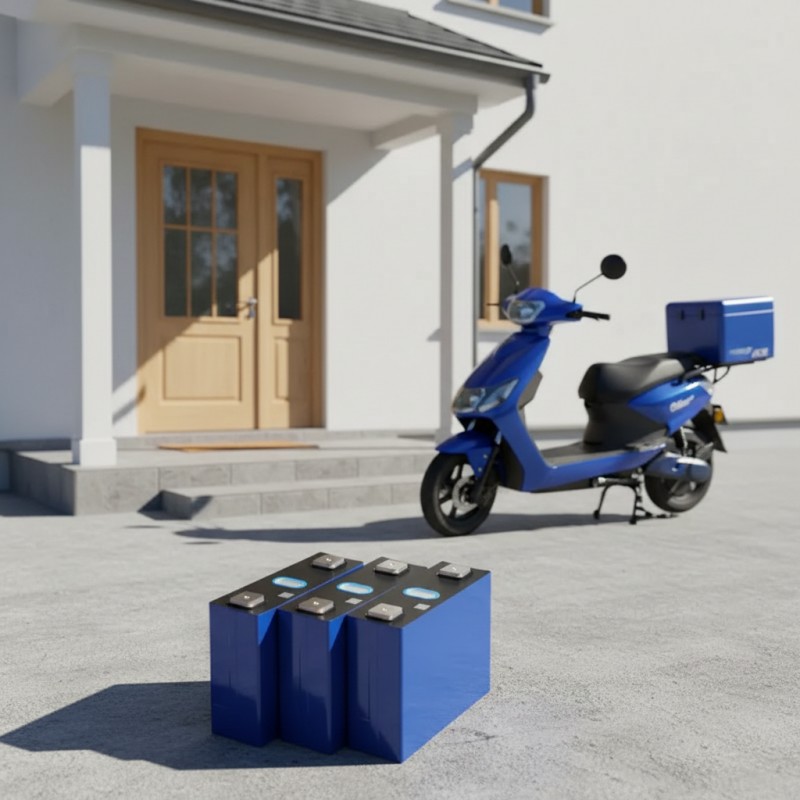
Discharge temperature range: -30℃ ~ 60℃. It retains over 60% rated capacity at -10℃ to guarantee reliable daily commuting in frigid zones.
Charging temperature range: 0℃ ~ 55℃ with step charging logic. Charging current will be automatically reduced at low temperatures and limited at high temperatures to balance charging speed and cell lifespan.
Optimal working temperature: 10℃ ~ 35℃. Cells maintain low internal resistance in spring and autumn, delivering steady power without obvious output drop during acceleration and climbing.
Long Cycle Life to Cut End-user Maintenance Costs
Daily commuter EVs undergo frequent charge-discharge cycles, so cell cycle performance directly impacts the full-lifecycle cost of vehicles.
Under standard test conditions (25℃, 0.5C charge & discharge), the cell retains over 70% capacity after 1500 cycles, with a 5-year calendar life at 50% SOC under room temperature, fully matching the service cycle of household EVs.
DC internal resistance is controlled below 1.5mΩ at 25℃ & 50% SOC. Consistent cell resistance minimizes voltage imbalance within the pack, lowering BMS balancing power consumption and reducing pack failures & after-sales maintenance.
Complete Rigorous Safety Tests to Meet Global Passenger Vehicle Standards
Safety is the top priority for consumer EVs. This cell has passed a full set of equivalent international reliability tests, including overcharge, overdischarge, external short circuit, 1.5m drop, nail penetration, extrusion, high-temperature heating, saltwater immersion, thermal cycling and low-pressure testing. No fire, explosion or electrolyte leakage occurs under all test conditions.
Clear protection thresholds are defined for BMS matching: maximum charging voltage 3.65V; minimum discharge voltage down to 1.8V under sub-zero temperatures. Charging will be restricted above 55℃, and power output will be limited once temperature exceeds 60℃, building multi-layer safety protection for driving, parking and charging scenarios.
Guidelines for Pack Integration
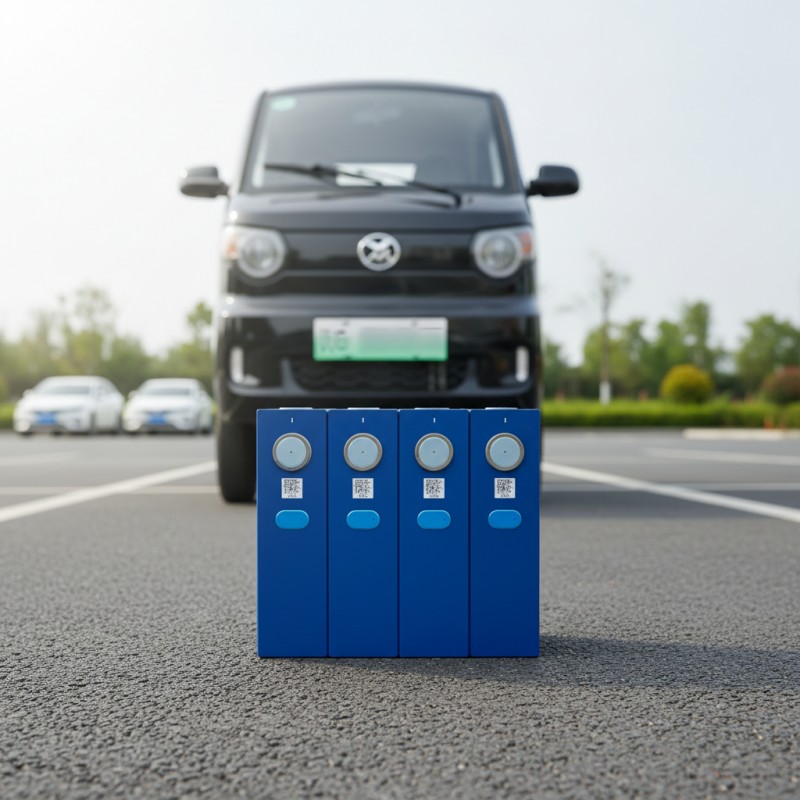
Cell Layout: Install cells with their height perpendicular to the vehicle’s driving direction to reduce vibration abrasion on terminals and welding seams.
Charging Rules: Apply standard 0.5C charging at 15℃–45℃; use low-current step charging when ambient temperature is below 5℃, and avoid high-rate fast charging in cold environments.
Long-term Storage: Maintain cell SOC between 30%–50% when vehicles are idle, and store the battery at around 25℃ to minimize self-discharge loss.
For daily commuter EVs requiring compact layout, stable cold resistance and low long-term maintenance costs, this 102Ah slim square LFP cell delivers well-matched performance in dimension, low-temperature output, cycle life and safety. It serves as a cost-effective cell solution for battery integration of small passenger EVs across the globe.
FAQ
Q1: What vehicles is this 102Ah slim square cell suitable for?
A: It is specially designed for short-distance household commuter EVs and mini city cars, matching compact chassis layout of small passenger vehicles. It is not recommended for heavy commercial vehicles or large energy storage containers.
Q2: Will the driving range drop sharply in cold weather?
A: No. The cell supports discharge from -30℃ to 60℃, retaining over 60% rated capacity at -10℃ to guarantee stable daily driving in cold regions. Step low-current charging is adopted at low temperatures to prevent cell degradation.
Q3: How long can the cell cycle life support household EV use?
A: Under standard 25℃ 0.5C charge/discharge test, it maintains over 70% capacity after 1500 cycles, with a 5-year calendar life at 50% SOC room-temperature storage. It fully meets the service life demand of household commuter cars, and the actual service life will be longer under shallow charge-discharge working conditions.
Q4: Has the cell passed full safety tests to meet overseas vehicle standards?
A: It has passed 10 complete safety tests including overcharge, overdischarge, short circuit, nail penetration, extrusion, saltwater immersion and thermal cycling. No fire, explosion or electrolyte leakage occurs during all tests. Multi-layer protection can be realized with matched BMS, applicable to global small passenger vehicle projects.
Q5: Are there special layout requirements for cell installation?
A: Yes. Install the cell with its height perpendicular to the vehicle’s driving direction, which reduces vibration abrasion on terminals and welding seams and lowers long-term failure risks.
Q6: How to store the cells if the vehicle stays idle for a long time?
A: Keep the cell SOC between 30% and 50% when the vehicle is not in use, store it at around 25℃, and complete a full charge-discharge cycle every 3 months to minimize self-discharge loss.
Q7: Are there temperature limits for cell charging?
A: The charging temperature range is 0℃~55℃. Standard 0.5C charging is available at 15~45℃; only low-current step charging is allowed below 5℃, high-rate fast charging at low temperature is forbidden; charging must be restricted when temperature exceeds 55℃.

Leave A Message
Scan to Wechat :

Hi! Click one of our members below to chat on