
 English
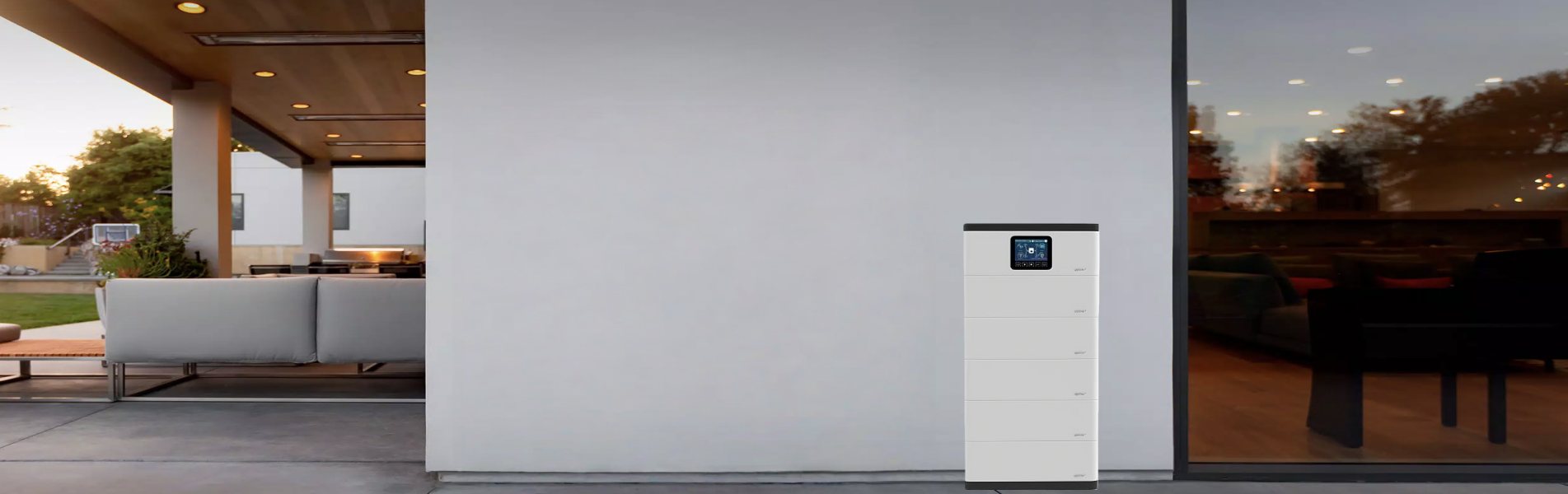
Our team is committed to providing high-performance energy solutions tailored to your needs. To initiate further communication, kindly submit a formal inquiry for the product(s) of your interest.



Our team is committed to providing high-performance energy solutions tailored to your needs. To initiate further communication, kindly submit a formal inquiry for the product(s) of your interest.
Many system integrators and engineers keep asking: how can a high-quality prismatic LFP cell effectively upgrade battery system performance and reliability?
The answer lies in choosing the right 102Ah LiFePO4 battery Cell. With stable output, high efficiency, and built-in safety, a well-designed energy storage cell can transform your entire system.
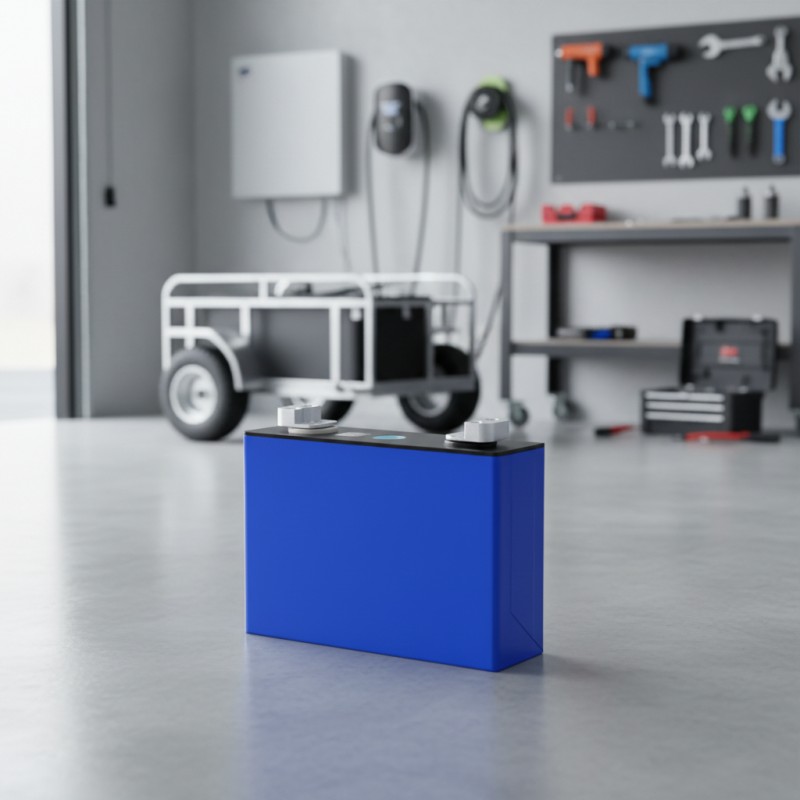
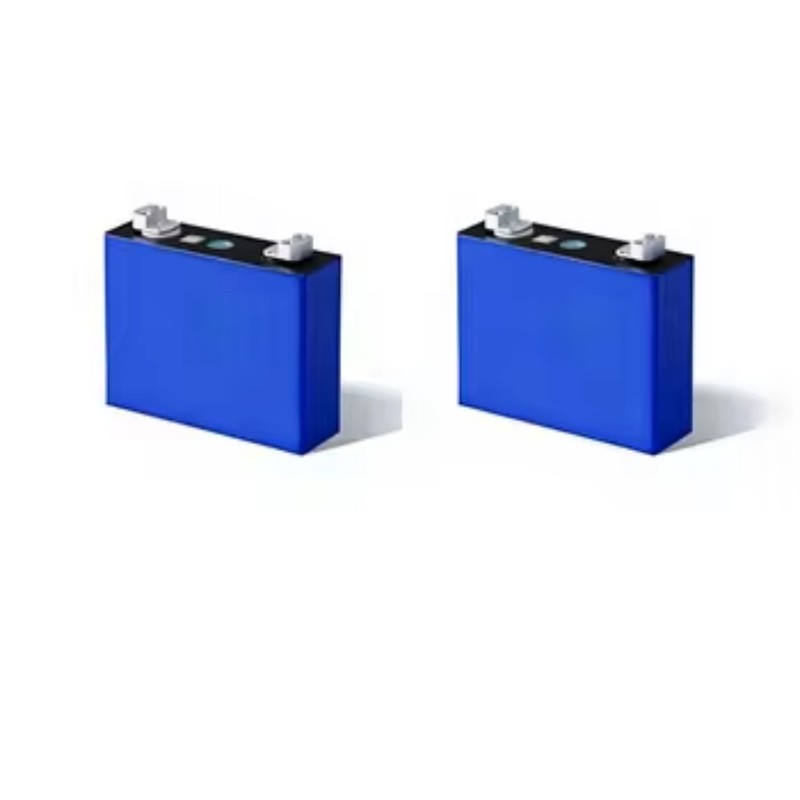
Higher Efficiency, Less Energy Loss
A reliable prismatic LFP cell delivers 3.2V nominal voltage and supports up to 1.0C continuous charge and discharge. With ultra-low internal resistance and energy efficiency ≥94%, it greatly reduces energy loss and heat generation during operation. This means your whole system runs cooler, longer, and more economically.
Safety You Can Trust
Safety is the core advantage of a quality LiFePO4 energy storage prismatic cell. It passes strict tests including over-charge, over-discharge, external short circuit, crush, drop, and nail penetration – with no fire, no explosion. The upgraded double insulation cover plate design further strengthens insulation and safety performance, providing all-round protection for your battery system.
Ultra-Long Cycle Life
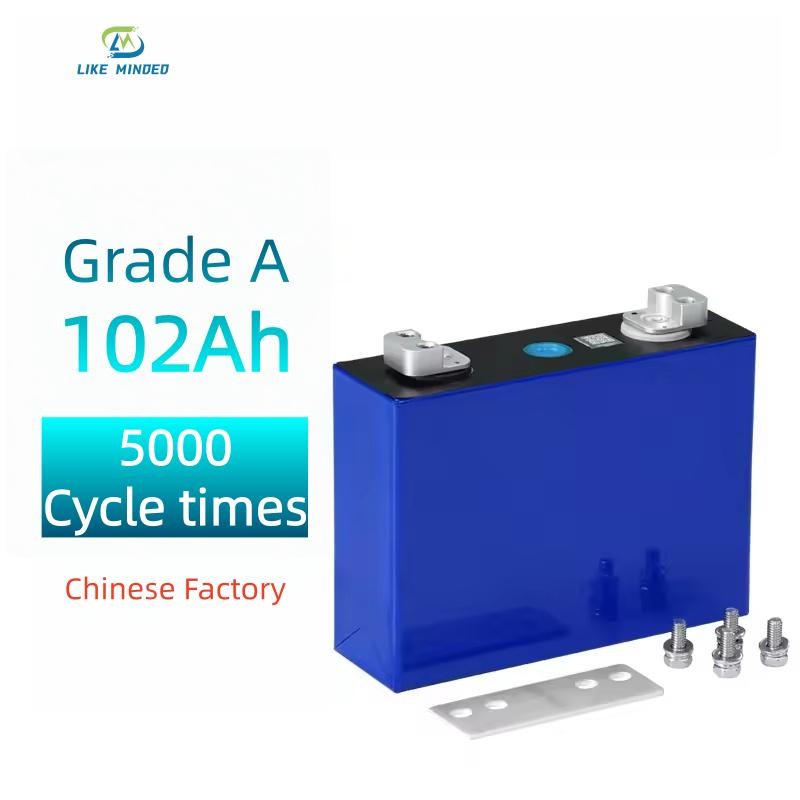
In terms of service life, a top-tier deep cycle lithium cell delivers exceptional performance. At 25°C and 0.5C working conditions, it achieves 5,000 cycles with 80% capacity retention. This greatly extends the service life of your battery system and lowers maintenance and replacement costs. It also features low self-discharge and excellent storage stability.
Reliable in Extreme Weather
A good 3.2V solar battery adapts to a wide temperature range from -20°C to 65°C, maintaining stable discharge capacity in both high and low temperature environments. Whether you are building an off-grid system in the mountains or a backup power unit in the desert, this rechargeable prismatic battery performs.
Easy Integration, Consistent Quality
High consistency and standard size make module assembly easier, helping improve system integration efficiency. When every cell behaves the same, your battery pack performs better and requires less maintenance.
With outstanding performance in efficiency, safety, cycle life, and stability, a premium 102Ah LiFePO4 battery significantly optimizes your battery system. It is the preferred prismatic LFP cell for energy storage systems, backup power supplies, and industrial power equipment.
Ready to upgrade your next project? Choose a LiFePO4 battery manufacturer you can trust – and build systems that last.
FAQ
1. What is a LiFePO4 battery? Is it safe?
LiFePO4 (Lithium Iron Phosphate) is a very stable cathode material for lithium batteries. Compared to other lithium batteries, it is less prone to overheating, with no fire and no explosion. It is one of the safest lithium battery technologies available today.
2. What is the actual capacity of this 102Ah battery cell?
The nominal capacity is 102Ah, tested at 0.2C charge and 0.2C discharge under 25°C±2°C. If the first test does not meet specifications, up to 3 retests are allowed.
3. How many years can this battery last?
Based on one full charge-discharge cycle per day, 5,000 cycles equals over 10 years of service life. Actual lifespan depends on operating environment, depth of discharge, and maintenance.
4. Can I use this battery in freezing temperatures?
Discharging is allowed, but charging is not. It supports discharge from -20°C to 65°C, retaining over 65% capacity at -20°C. Charging must be done above 0°C – charging a cold battery will cause permanent damage.
5. How should I store this battery properly?
Store at 15% to 40% SOC in a cool, dry place (0°C to 25°C, humidity ≤60%). For storage longer than three months, perform a standard charge-discharge cycle every 3 months.
6. Do I need a BMS for this battery?
Yes, absolutely. A Battery Management System (BMS) protects the battery against over-charge, over-discharge, over-current, and short circuits. It is an essential safety component for any battery pack.
7. Can I connect multiple cells in series or parallel?
Yes. You can build 12V (4S), 24V (8S), or 48V (15S or 16S) battery packs. A proper BMS is required, and all cells should have consistent voltage and capacity.
8. What are the dimensions and weight of this cell?
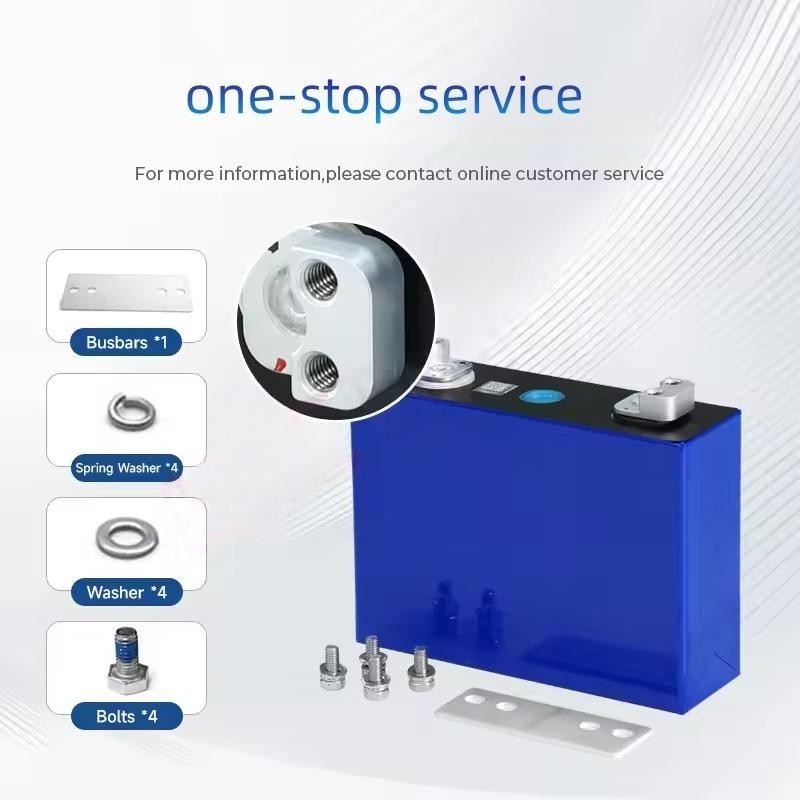
Dimensions: 160.0mm (L) × 118.5mm (H with terminal) × 50.1mm (T). Weight: 1985g ±100g (approximately 2kg).
9. Do you offer custom module or pack solutions?
Yes. As a professional LiFePO4 battery manufacturer, we offer OEM/ODM services to customize module and battery pack solutions based on your specific requirements.
10. What is the self-discharge rate?
At 25°C, self-discharge is ≤3% in the first month, and ≤1.5% per month thereafter. This is very low compared to other battery chemistries.

Leave A Message
Scan to Wechat :

Hi! Click one of our members below to chat on