
 English
Our team is committed to providing high-performance energy solutions tailored to your needs. To initiate further communication, kindly submit a formal inquiry for the product(s) of your interest.



Our team is committed to providing high-performance energy solutions tailored to your needs. To initiate further communication, kindly submit a formal inquiry for the product(s) of your interest.
Forklifts, AGVs, aerial work platforms, port cranes—what do these high-power industrial equipment fear most on continuous-duty jobsites? Not motor failure, not hydraulic leaks—but running out of power halfway through a shift.
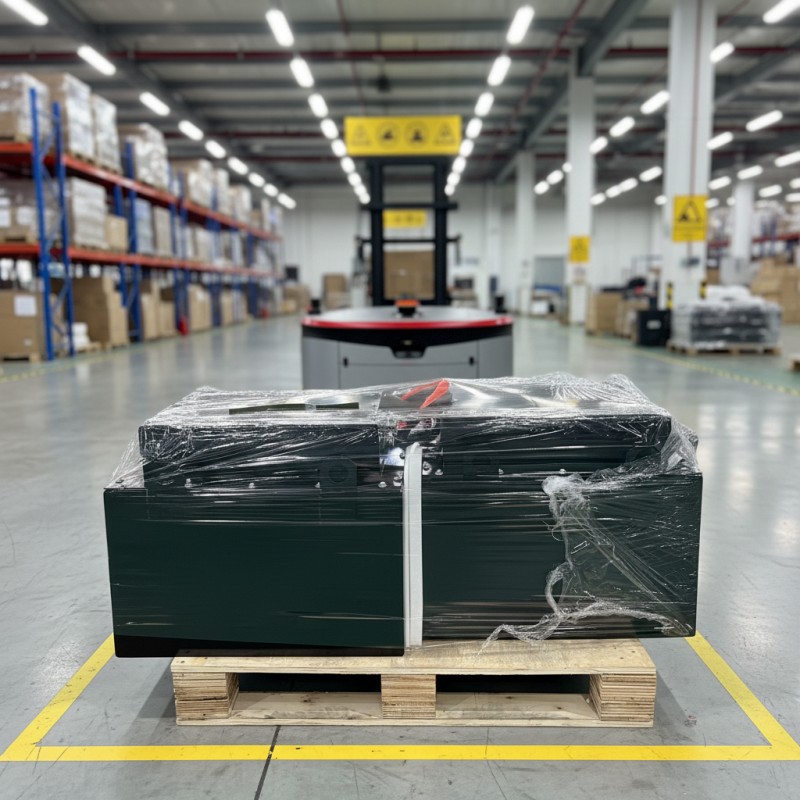
Two hours of charging, 40 minutes of work. Not only does it disrupt operations, but it also severely impacts productivity. Likeminded addresses this critical pain point with the LMDD80V280Ah LiFePO₄ battery pack, delivering 22.4kWh of capacity and 400A continuous discharge capability—providing all-day power for a wide range of high-demand equipment.
What Does 22.4kWh Actually Mean?
Many users don't have an intuitive grasp of "280Ah"—but converting it to "kilowatt-hours" makes it clear.
With a nominal voltage of 80V and capacity of 280Ah, this battery pack stores a total of 280Ah × 80V = 22.4kWh. Take an 8kW electric forklift as an example—under moderate load conditions, theoretical runtime is approximately 22.4kWh ÷ 8kW ≈ 2.8 hours. Combined with quick charging during lunch breaks or shift changes, it can easily support an entire day shift—one charge, one full shift.
Compared to traditional lead-acid batteries (approximately 12–14kWh in the same volume), Likeminded's LiFePO₄ pack delivers about 60% more energy storage in the same footprint—meaning one less charge per day and roughly two extra hours of productive work.
400A Continuous Discharge—Handling Instant Current Surges with Ease
Industrial equipment draws currents several times higher than rated values during startup or climbing. If the battery pack's discharge capability falls short, the result can be BMS overcurrent protection triggering a shutdown—or worse, internal damage to the battery cells.
The Likeminded LMDD80V280Ah supports a 400A rated continuous discharge current, with a 450A peak (sustainable for approximately 10 seconds). At 400A × 80V, that translates to about 32kW of continuous output power, with peak power reaching approximately 36kW. This means:
• Two 15kW motors can operate simultaneously
• A single 22kW motor can run at full load without breaking a sweat
• Startup current surges are comfortably absorbed by the peak capacity
For high-power applications such as logistics handling equipment, port cranes, and mining locomotives, the 400A threshold comfortably covers the vast majority of requirements—no more worrying about "power on paper but not in practice."
The 25S LiFePO₄ Architecture—Balancing Safety and Longevity
Why 25 cells in series rather than another configuration? Each LiFePO₄ cell has a nominal voltage of 3.2V, and 25 cells in series yield an 80V platform—one of the most common voltage standards for industrial equipment (covering 60V–96V wide-voltage devices).
More importantly, Likeminded uses Lithium Iron Phosphate (LFP) cells, which offer three key advantages over NMC (Nickel Manganese Cobalt) chemistries:
• Superior thermal stability: LiFePO₄ decomposition temperature is approximately 500–600°C, far exceeding NMC's 200–300°C—even in the event of an internal short circuit, the risk of thermal runaway is significantly lower
• Extended cycle life: ≥1,200 charge-discharge cycles—with one full cycle per day, that translates to approximately 3–4 years of service life
• No reliance on precious metals: Free of cobalt, nickel, and other scarce resources, ensuring a more stable and predictable supply chain
For equipment that demands long, continuous operation, the safety and longevity of LiFePO₄ are often more critical than raw energy density.
Three-Tier BMS Protection—Eliminating Overcharge and Over-Discharge Risks
High-power equipment operates in complex environments where voltage fluctuations, temperature swings, and current surges can occur at any moment. Likeminded integrates the BI5132A-DTU BMS, which classifies faults into three distinct levels:
• Level 1 Fault (Minor): For example, SOC below 20% or slightly low cell voltage—system issues an alarm but keeps relays closed and equipment running
• Level 2 Fault (Moderate): Such as undervoltage or charging overcurrent—alerts the operator to wrap up work and recharge promptly
• Level 3 Fault (Critical): Such as total voltage dropping below 67.5V, extreme undervoltage at 1.5V, or extreme overtemperature at 65°C—BMS automatically opens relays, forcibly halting charge/discharge to protect the battery pack from irreversible damage
This three-tier protection ensures that equipment won't "push through" to the point of failure, while avoiding frequent nuisance shutdowns caused by minor fluctuations—a critical balance for continuous-duty, high-power applications.
Real-World Deployment Case: Electric Retrofit of a 22-Ton Port Crane
A recent Likeminded project illustrates the value proposition clearly: a port retrofitted a 22-ton rubber-tired gantry crane from diesel to full electric drive, equipped with two LMDD80V280Ah battery packs operating in parallel.
Before the retrofit: The diesel version consumed approximately 18 liters of fuel per hour. At 10 hours of daily operation, fuel costs alone ran to 18L × 10h × ¥7.5/L = ¥1,350 per day, plus engine maintenance—pushing daily operating costs past ¥1,500.
After the retrofit: The two battery packs provide a total of 45kWh of storage. At an industrial electricity rate of ¥0.8/kWh, daily electricity costs are approximately ¥36—just 2.4% of the fuel cost. The battery system supports fast charging, reaching full capacity in 1.5 hours—easily topped up during lunch breaks to sustain a full day's work. The payback period is estimated at just 18 months.
Charging Strategy and Operational Rhythm Optimization
This battery pack has a maximum charging current limit of 75A, corresponding to approximately 6kW of charging power. Charging from 20% SOC to 100% (22.4kWh × 0.8 = 17.9kWh) takes approximately 17.9 ÷ 6 ≈ 3 hours.
For all-day operations, we recommend a "fast charge at lunch + full charge overnight" strategy:
• A 1.5-hour lunch break can replenish approximately 9kWh (roughly 40% SOC)—enough for the afternoon shift
• A full overnight charge to 100% SOC ensures maximum available capacity for the next day's operations
If faster charging is required, consider operating two battery packs in parallel with a higher-capacity charger—consult Likeminded engineering for configuration guidance.
Bottom Line: For high-power continuous-duty applications in logistics, port operations, mining, and material handling, the Likeminded LMDD80V280Ah delivers reliable power with 22.4kWh of capacity, 400A continuous discharge, LiFePO₄ safety architecture, and three-tier BMS protection. Compared to traditional lead-acid or diesel solutions, it offers significant advantages in runtime, safety, and total cost of ownership.
For detailed technical specifications or a customized solution tailored to your specific application, contact the Likeminded technical team for a site assessment and system design consultation.
FAQ
Q1: How does the battery pack manage temperature rise during 400A continuous discharge?
The BMS continuously monitors cell temperature. At 50°C, a Level 1 alarm is triggered; at 55°C, Level 2; at 60°C, Level 3 protection activates (opening relays). Ensure adequate ventilation and cooling in your equipment layout, and avoid prolonged full-load operation in enclosed spaces without airflow.
Q2: Can multiple battery packs be paralleled for increased capacity?
The specification clearly states that series connection is not supported. Parallel configurations require customized BMS strategy validation—do not attempt to parallel packs without engineering review. For higher capacity requirements, contact Likeminded engineers to evaluate a parallel solution.
Q3: Will range decrease in winter low-temperature conditions?
LiFePO₄ cells have reduced activity at low temperatures, so range will decrease accordingly. The BMS automatically adjusts undervoltage protection thresholds from 2.8V down to 2.4V when the minimum cell temperature falls below 0°C, unlocking additional available capacity to maximize winter range. For extended cold-weather operation, consider adding a heating insulation module.
Q4: How are the warranty period and cycle life calculated?
The warranty period is 3 years from the date of manufacture, with charge-discharge cycle life ≥1,200 cycles—whichever comes first. Damage caused by improper use (e.g., overcharge, over-discharge, short circuit, water ingress, physical damage) is not covered under warranty, even within the 3-year period.

Leave A Message
Scan to Wechat :

Hi! Click one of our members below to chat on